martes, 9 de abril de 2019

Measuring: PEAS PART 1

Resultado de imagen de erase una vez mendel

Hello everyone!

馃摻️ In today's post, we will comment on the third video脡rase una vez... Mendel y los guisantes. This video lasts about 25 minutesIn this happens the same as the last one, we are not going to find out specific contexts talking about measurment issues, but we, as a teachers, have to think about a way to introduce the topic, and in the following lines I am going to give you some clues to do it. 

First of all, we must create a context where we explain our students that the video that we are going to see speaks about several important and transversal contents between subjects but at the end of it we will focus on one of them.

This time our friends talk about the genetic, and the Teacher will be in charge of explaining who Mendel was and what he did in relation with statistics.
In this class we will do games and activities to introduce the topic to the students. All the contents in the video are related with the history and natural science subject, so you can mix the classes so as to the students do not lose the motivation but to review and learn new contents. In addition, we will do 1 experiment, as in the previous classes.

After watching the video it is important to make an introduction in the topic, it is necessary to explain the contents that we will deal with. For that reason, we can use this web page where the statictis are explained, so we can explain in a brief introduction how we will do the exercises below.


馃摑 ACTIVITY 1: for the first activity that we are going to carry out, we must familiarize the students with the subject in question, that is why in the first place we can do a search in the network about who was Mendel and what relationship he has with the subject of statistics. Once we have contextualized, we can do a series of activities to know the different terms that the statistics encompass. It is important to do this type of knowledge activities so that then we can do without any difficulty the rest of the proposed activities. In this PDF you will find 23 activities to perform and here the different terms that we will use throughout the topic.
Resultado de imagen de ni脙±os estudiando


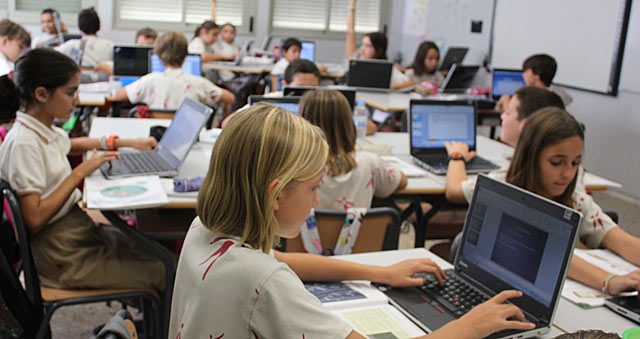
馃摑 ACTIVITY 2: for the second activity we will return to the video and select a fragment of about 10-20 minutes. Previously, we must select a character (such as Mendel or one of our friends), an object (such as peas), a secondary character, a place and an action. Then we will create a double entry table to record the following data; we will put the fragment of the video and ask the students to write down how many times the previously agreed elements appear. Once we have finished we will pass and study them, ending with a graph where the results are collected.

To make these graphics, I suggest you use the following web pages:
- Piktochart: allows you to create infographics from data and graphics that you can easily create.
- Google spreadsheet: allows you to make different graphs with the data obtained.
Resultado de imagen de ni脙±os estudiando


I hope you enjoyed this entry!

Marta Woman Teacher: Light Skin Tone

martes, 2 de abril de 2019

Measuring: SURFACES AND VOLUME PART 1

Resultado de imagen de erase una vez galileo

Hello everyone!

馃摻️ In today's post, we will comment on the second video脡rase una vez... Galileo. This video lasts about 25 minutes. Unlike the last video, in this one we are not going to find out specific contexts talking about measurment issues, but we, as a teachers, have to think about a way to introduce the topic, and in the following lines I am going to give you some clues to do it. 

First of all, we must create a context where we explain our students that the video that we are going to see speaks about several important and transversal contents between subjects but that at the end of it we will focus on one of them.

This time our friends will not travel anywhere, but the Teacher will be in charge of explaining who Galileo was and what he did to be so famous in the world of mathematics, all this will take us to the topic of flat surfaces and volumes measurements.
In this class we will do games and activities to introduce the topic to the students. All the contents in the video are related with the history and natural science subject, so you can mix the classes so as to the students do not lose the motivation but to review and learn new contents. In addition, we will do 1 experiment, as in the previous classes.

After watching the video it is important to make an introduction in the topic, it is necessary to explain the contents that we will deal with. For that reason, we can use this web page where the measure, surfaces and volumen are explained, so we can explain in a brief introduction how we will do the exercises below.


馃摑 ACTIVITY 1: once the students have done several activities on the subject and know how to do the different areas and volume of the different bodies, we will work on the video and the contents that it offers us. For the first activity that we are going to do, we will use the methodology based on cooperative work, where group students will look for the different inventions created by Galileo and therefore appear in the video, which are the pendulum, the proportional circle, the telescope and investigations on spherical bodies. For them we can make use of a WebQuest created by ourselves or that maybe the students can create it, again, making use of the transversal contents within the curriculum.
Moreover, I leave you a web page where we can find some of the discoveries as well as if explanation.

Resultado de imagen de alumnos haciendo trabajos en grupos


馃摑 ACTIVITY 2: for the next activity we will create our own geometric bodies using some established measures. In this video we can find a brief explanation of how we can do it, and also in this post of another blog of mine you can find more games, activities and experiments related to the same topic. In order to make reference to the measure, when creating the bodies we will give the students a series of established measures, that is, we will say that the area should be 4 cm2, for example. In the same way, we can give geometrical bodies to the students and that they calculate the measures with which we are working.


geometria comestible


I hope you enjoyed this entry and you have accompanied us to the stars!

Marta Woman Teacher: Light Skin Tone

martes, 26 de marzo de 2019

Measuring: THE TIME PART 1

Resultado de imagen de erase una vez la medicion del tiempo

Hello everyone!

馃摻️ In today's post, we will comment on the first video脡rase una vez... La medici贸n del tiempo. This first part lasts about 25 minutes. As we talked about in the previous post, in it we are going to find out our friends discovering the measure of time in different parts of the world, as well as in different periods of time in the human life.

As we said in the previous post, although we found enough content related to the topic we want to work on, as an introduction is being made to the topic, in class we will do the same with the students, thus making an introduction to Measurement. Therefore, the type of game or activities that we do for this part must be motivating for the students and that they transmit curiosity to know the contents that will come next in the subject.

Since our friends in the video travel through the time, we will tell the students that we will also do a journey to these ages in order to know "how did they measure the time?" In this class we will do games and activities to introduce the measure to the students. All these contents are related with the history subject, so you can mix the classes so as to the students do not lose the motivation but to review and learn new contents. In addition, we will do 3 experiments, with which the students will be fascinated and motivated for later classes.

First of all, it is important to make an introduction in the topic, it is necessary to explain the contents that we will deal with. For that reason, we can use this web page where the conversion of units in the time system is explained, so we can explain to the students in a brief introduction how we will do the exercises below.

馃暪️ GAME: once several activities have been carried out and the students have managed to solve them in the realization of the conversions, we will make a series of games that motivate them to continue investigating in the wonderful world of measurement. In the following website we can find online games that we can use for students to review the contents at home or, if possible, in the classroom continue to strengthen this knowledge.

Resultado de imagen de alumnos ordenador


馃摑 ACTIVITY: for the second activity we will focus on the development of problems, since these have a quite important weight within the primary education classrooms, due to they serve us for the day to day. That is why we will explain the following points to the students; firstly, as they must perform a mathematical problem in which they find different hours, in the following web page we can find the explanation to the aforementioned.
On the other hand, we will explain the different time zones and how in other parts of the world it is not the same time we have in our country.
With these two premises, creativity is on the table and problems will begin to arise and resolve themselves. You can create a worksheet with diferent problems in order to they can solve it.


Imagen relacionada

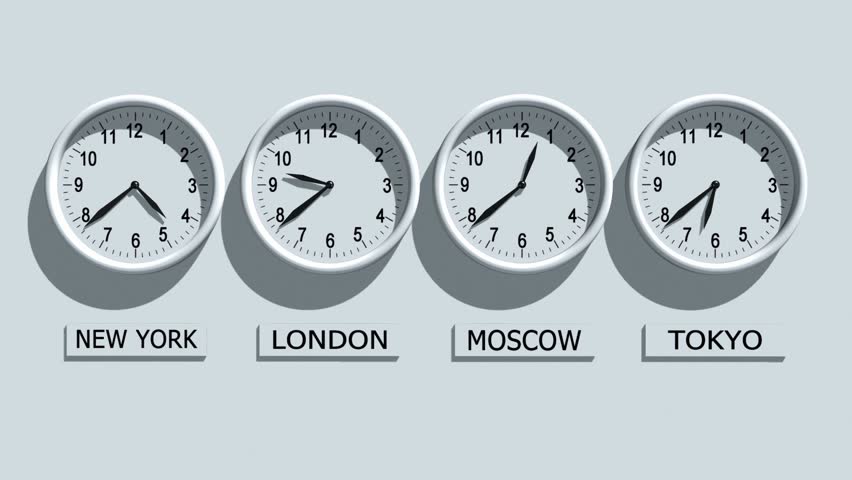
Another idea to take into account would be the possibility of placing different clocks in the classroom with several cities from different parts of the world to motivate them in the tasks, that is, we can say that at "11:10, New York time we will correct the exercises". Moreover, with just a single clock and having explained the time zones we can say the same sentence and the students have to calculate the time left they have to do the tasks.


I hope you stay and help us in this exciting trip through The Time!

Marta Woman Teacher: Light Skin Tone

martes, 19 de marzo de 2019

Welcome!

Resultado de imagen de erase una vez la medicion del tiempo


Hello everyone!


Everything has a beginning like the history. And when we speak of primary school students, this begining must be full of motivation and enthusiasm. It is well known that most students, regardless of the course they are, "hate" everything related to the subject of Mathematics. But what these students do not know is that mathematics is in our day to day, and without they know it, they "love" Mathematics.

Therefore, in this post I would like to talk about how we can motivate the students at the beginning of the course so that they have a positive predisposition towards the subject of Mathematics, especially with Measurements' concents.

As adults/teachers, we find the motivation to learn something when we find concepts that we do not know and therefore they arouse us curiosity. Once this curiosity has reached us, we make available all possible means to find an answer to the question raised.

Therefore, motivation linked to curiosity leads to learning something new. The same thing happens in elementary school students, although unlike adults, they may not yet have the capacity to find the resources or tools necessary to answer the questions they are asked.

It is at this point that the teacher has to intervene and, on the one hand, make available to the students resources that motivate them and arouse curiosity to know what is presented to them, and, on the other hand, to give the necessary tools so that they themselves or with the teacher's help solve the initial doubts.

kid dancing GIF

Thus, any kind of measurement class has to start with a motivating element in which is what we want to teach the students and, therefore, lead to the curiosity of it.

First of all, we should look for those foci that motivate the students of today, which are quite obvious. If the students are smaller, we must use a lot of audiovisual content to attract their attention, on the contrary, with the older students we can introduce the management of new technologies.

In both cases, the visual elements are very important. That's why, I think that starting with a video is a great idea so students are motivated and arouse curiosity about the knowledge that we will later see in class.


The series of videos that would be used for this would be a classic: 脡rase una vez... la cienciaThese videos allow us to introduce a large amount of content that we can work on throughout the course and what we are going to do in this blog. Moreover, we are going to work with transversal concept related with the history subject, so in order to visualise the videos it would be recommended to use the history classes and the maths ones.

In the history classes we will introduce the video, contents, explanations and so on. Then in math classes we will carry out what they have learned in the previous classes, activities and experiments.
In each post we will comment on a video, as well as the contents that we can work on it, games and experiments that can be carried out in class.

I hope you enjoy this trip through the history of Mathematics!

Marta Woman Teacher: Light Skin Tone

Presentation

english hello GIF by Happy Motion


Welcome to this blog!


First of all, I would like to introduce myself, I am Marta L贸pez Mart铆nez, a student of 4th year of Bilingual Primary Education at the University of M谩laga.

This blog, linked to the subject of Didactics of Measurements, will serve me to comment on the most interesting concepts that I find related to contents of measurement.

I would also like to include activities that students can take in the math class, resources, experiments, as well as a glossary at the end of each post with the most interesting words.


I hope you enjoy it!
Marta Woman Teacher: Light Skin Tone

Measuring: MATEAMIGO

Hello everyone! In today's post I want to talk about some math books to use in our classes and complement all previous posts...